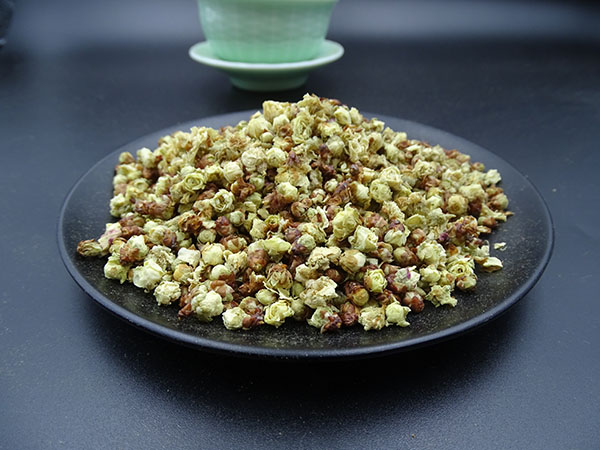
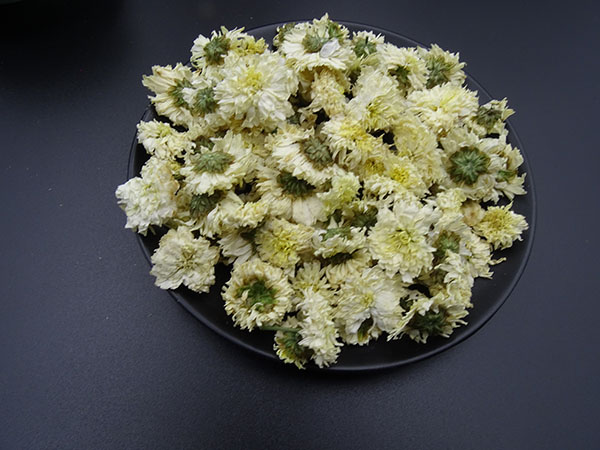
The dried buds are spherical, 4-8 mm in diameter. They have three to four layers of brown, scaly bracts. Within the bracts are five sepals, pale yellowish-brown with a slight green tinge, oval, and arranged in a shingle-like pattern. The petals are five or more, white or yellowish-white. They are light in texture, fragrant, and have a light, astringent flavor. Preferred are those with clean, intact, unopened buds, green sepals, and white petals, and a delicate fragrance.
This fruit is oval or oblong, 0.2-0.3 cm thick, 3-15 cm or more long, and 2-4 cm wide. The cut edge is bluish-green, wrinkled, and the center of the fruit is white or yellowish-white with a few red granules. It is soft and slightly elastic, containing 5-10 nearly oblong, flat seeds, which often leave holes after falling off. It is slightly tough and not easily broken. It has a faint odor and a bitter taste. Preferred varieties have green edges, white flesh, thin flakes, and few seeds.
Treats stomachache, indigestion, dysentery, strain, and lower back and leg pain.
Guizhou Folk Prescriptions Collection: "It strengthens the stomach and nourishes qi, dispels wind and eliminates phlegm. It treats rabies bites; externally, it treats malignant sores, insect and mosquito bites."
Inner Mongolian Chinese Herbal Medicine: "It removes dampness and relieves pain, detoxifies and reduces swelling, and strengthens the stomach. It treats injuries from falls, lower back and leg pain, sores, carbuncles, swelling, and indigestion."
Atractylodes rhizome has effects such as promoting the circulation of Qi and blood, relieving pain, reducing accumulation, anti-inflammatory, antioxidant, improving cardiovascular health, aiding digestion, assisting in gynecological treatment, and anti-tumor activities.
Tingli seed has a bitter, pungent, and cold nature, enters the lung and bladder meridians, and has the effects of purging the lungs to relieve asthma and promoting urination to reduce swelling.
This plant appears as a wrinkled, curled mass. The roots are conical, often curved, and 3-7 cm long; the surface is brown and wrinkled; the root head has brown or yellowish-white hairs, some of which have already fallen off. The leaves are basal, often wrinkled and broken. The intact leaves are oblanceolate, green-brown or dark gray, with a pointed or blunt tip, shallowly lobed or pinnate margins, gradually narrowing at the base and extending downward into a petiole. The main vein on the lower surface is distinct. There are one to several flower stems, each with a terminal head inflorescence. The bracts are multi-layered, with the inner layer being longer. The corolla is yellow-brown or pale yellow-white. In some cases, many oblong achenes with white pappus can be seen. The odor is faint and the taste is slightly bitter.
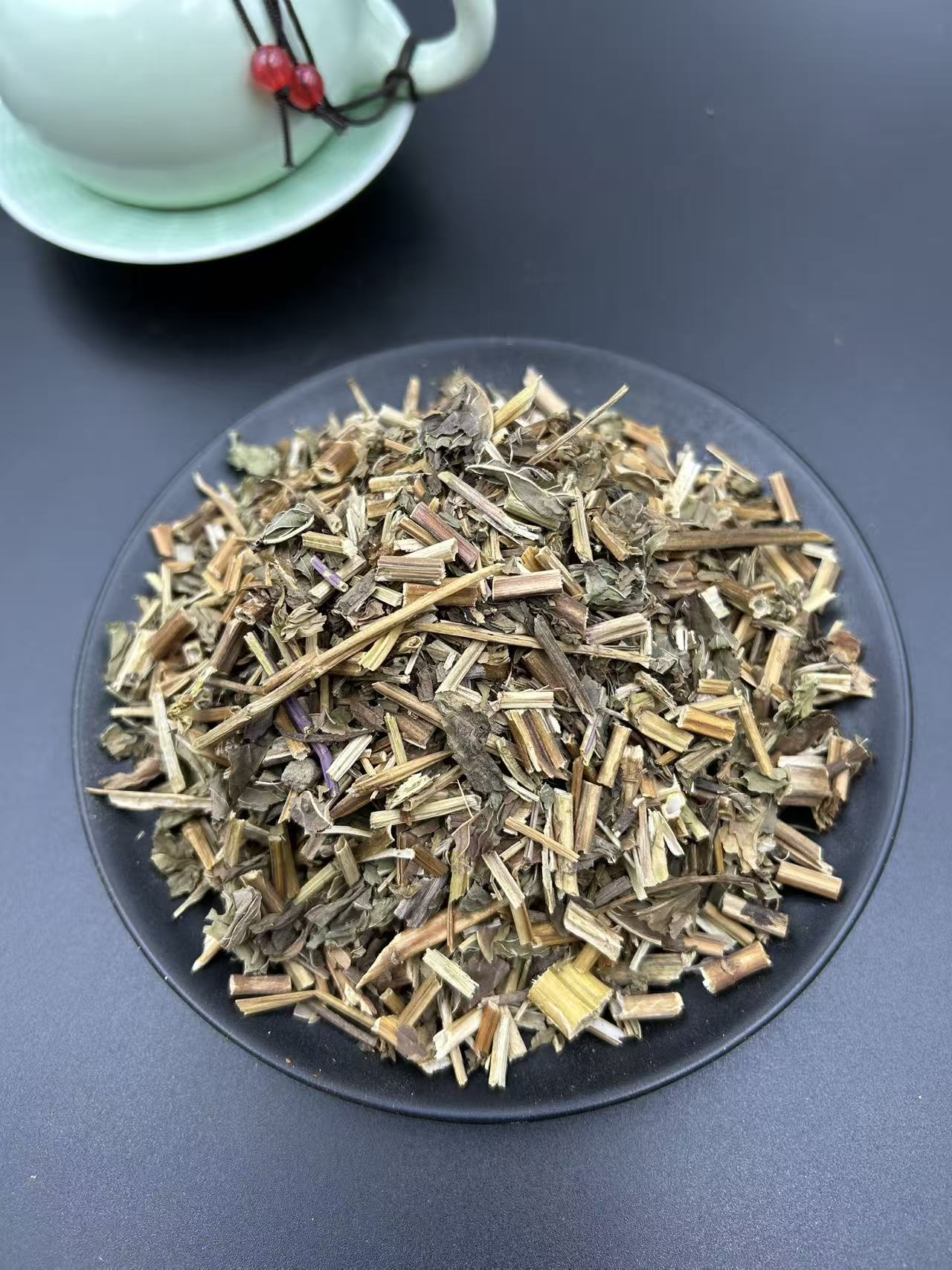
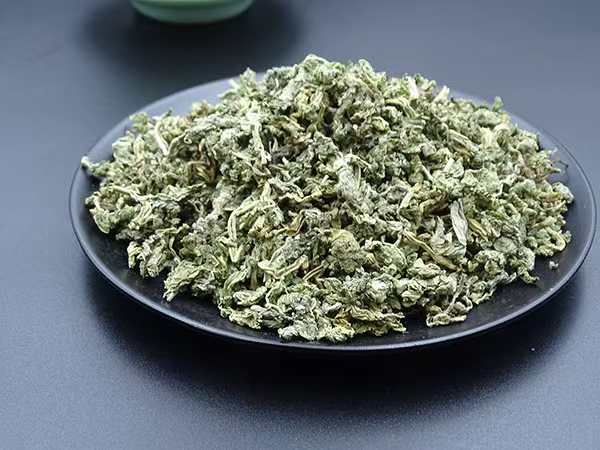
Mint leaves have the effects of dispersing wind-heat, benefiting the throat and relieving rashes, soothing the liver and regulating qi, and clearing the head and eyes. Mint leaves are mainly used to treat external wind-heat, headaches, sore throats, and bloating due to food stagnation.
This herb is the dried aerial parts of the mint plant, Mentha spp., of the Lamiaceae family.
It is used for wind-heat colds, the initial onset of wind-heat, headaches, red eyes, sore throat, mouth ulcers, rubella, measles, and chest and flank distension.
Chrysanthemum has long been hailed as a flower of longevity and anti-aging, containing anti-aging ingredients and those that promote the breakdown and excretion of cholesterol. Its beauty benefits include promoting blood circulation, moisturizing the skin, clearing the mind, and improving complexion. Chrysanthemum can also enhance physical fitness and prolong life.